A Branded Chatbot for Service Business Enquiries
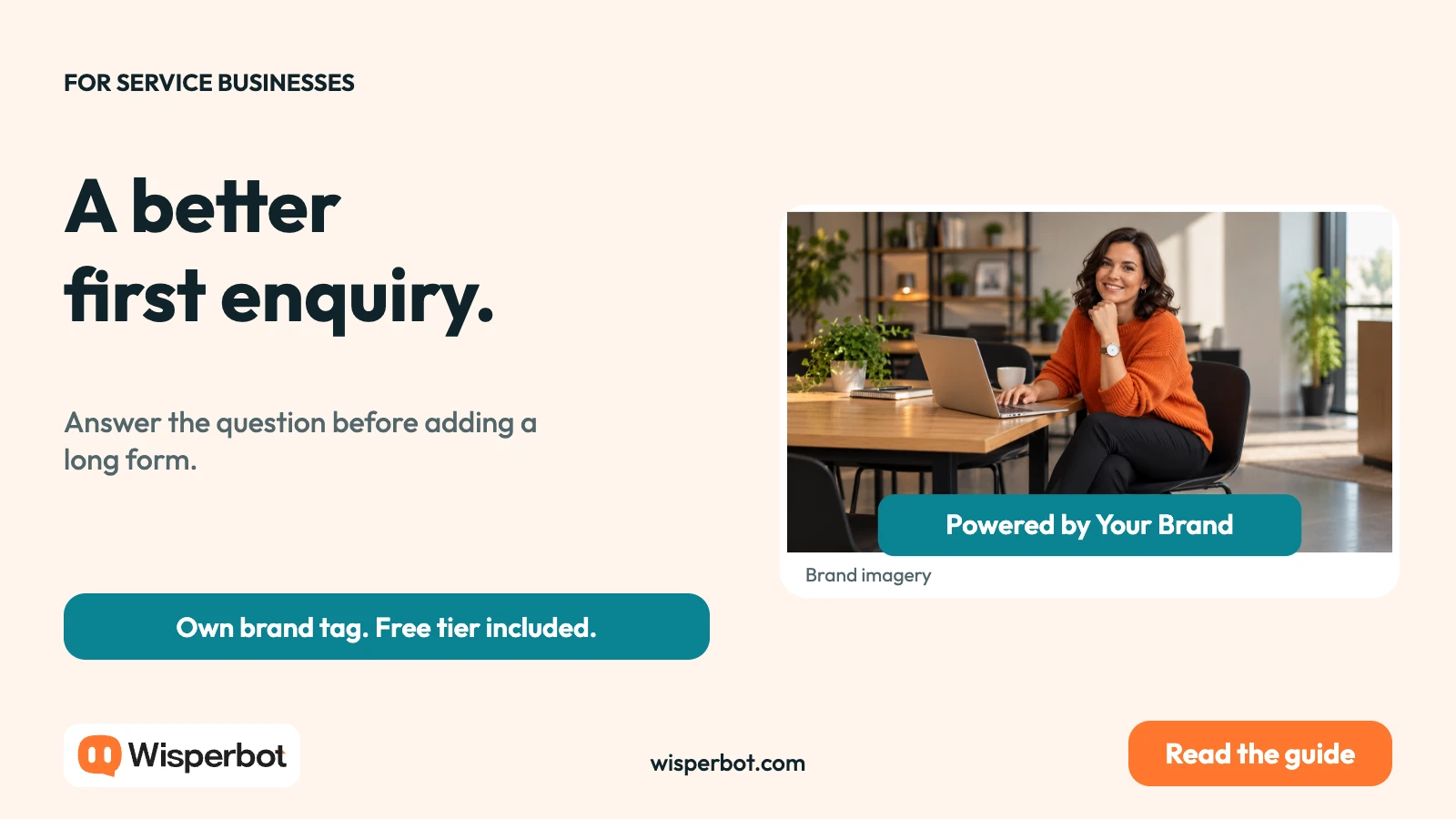
Answer early service questions under your own chatbot tag. Keep qualification short, set realistic follow-up, and separate enquiries from confirmed bookings.
In this article
A customer finds your service after closing time and asks whether you can help. The question may be simple: where you work, what the service includes, or how to request a quote. It can still decide whether the conversation continues.
A website chatbot can handle that first exchange when it has clear information and sensible limits. For a service business, it should introduce your company rather than make the customer wonder whose support they have reached.
WisperBot lets you change the chatbot's footer company name on every tier, including Free. The tag can say “Powered by Your Brand” while you test a focused enquiry experience.
Answer what the customer needs before asking for details
A common mistake is to begin with a long form. The customer asks whether you cover their area, and the business asks for a full contact record before answering.
Start with the useful information where possible. If the service area is published, explain it. If location changes the answer, ask for the relevant area rather than a complete address straight away.
Then ask for the smallest next detail needed. A repair business may need the type of equipment. A training provider may need the course of interest. An agency may need the broad project category.
These are examples of enquiry design, not universal scripts. Choose questions that fit your business. A chatbot should not force a clinic, consultancy, and repair service through the same set of choices.
Distinguish an enquiry from a confirmed booking
“Can I come tomorrow?” can mean several things. The customer may want opening hours, a list of services, or a confirmed appointment.
A bot with published business information can explain hours and the enquiry process. It should not claim a slot has been reserved unless a verified booking integration has actually completed that action.
Make this boundary visible in the answer. “The team can confirm availability” is clearer than “You're booked” when no calendar action has occurred.
The same rule applies to quotes. A published starting price is different from a final quote for a specific job. State which one the business can provide and who approves exceptions.
| Customer need | Helpful first response | Required next step |
|---|---|---|
| Service coverage | Explain published areas | Clarify location if needed |
| Opening hours | Give the current schedule | Explain staff response hours separately |
| Price guidance | Use approved published information | Staff confirms a tailored quote |
| Appointment request | Explain how to request a slot | Confirm through the actual booking process |
| Unusual or sensitive case | Acknowledge the limit | Route to an appropriate person |
Let the introduction carry your business identity
Use a header and welcome message that describe the service plainly. “Ask about our services or how to arrange a visit” is easier to act on than a claim that the assistant can handle everything.
Set the footer company name to the public name customers recognise. In WisperBot, this changes the name after the standard “Powered by” prefix on Free and paid tiers.
That control concerns the text tag. A custom launcher image and other forms of rebranding have separate scope. You can still create a recognisable first conversation with a clear name, relevant welcome copy, and useful answers.
Do not conceal that the first reply comes from AI. The business identity tells the customer whose service they are discussing; it does not need to imply that a person has already reviewed their request.
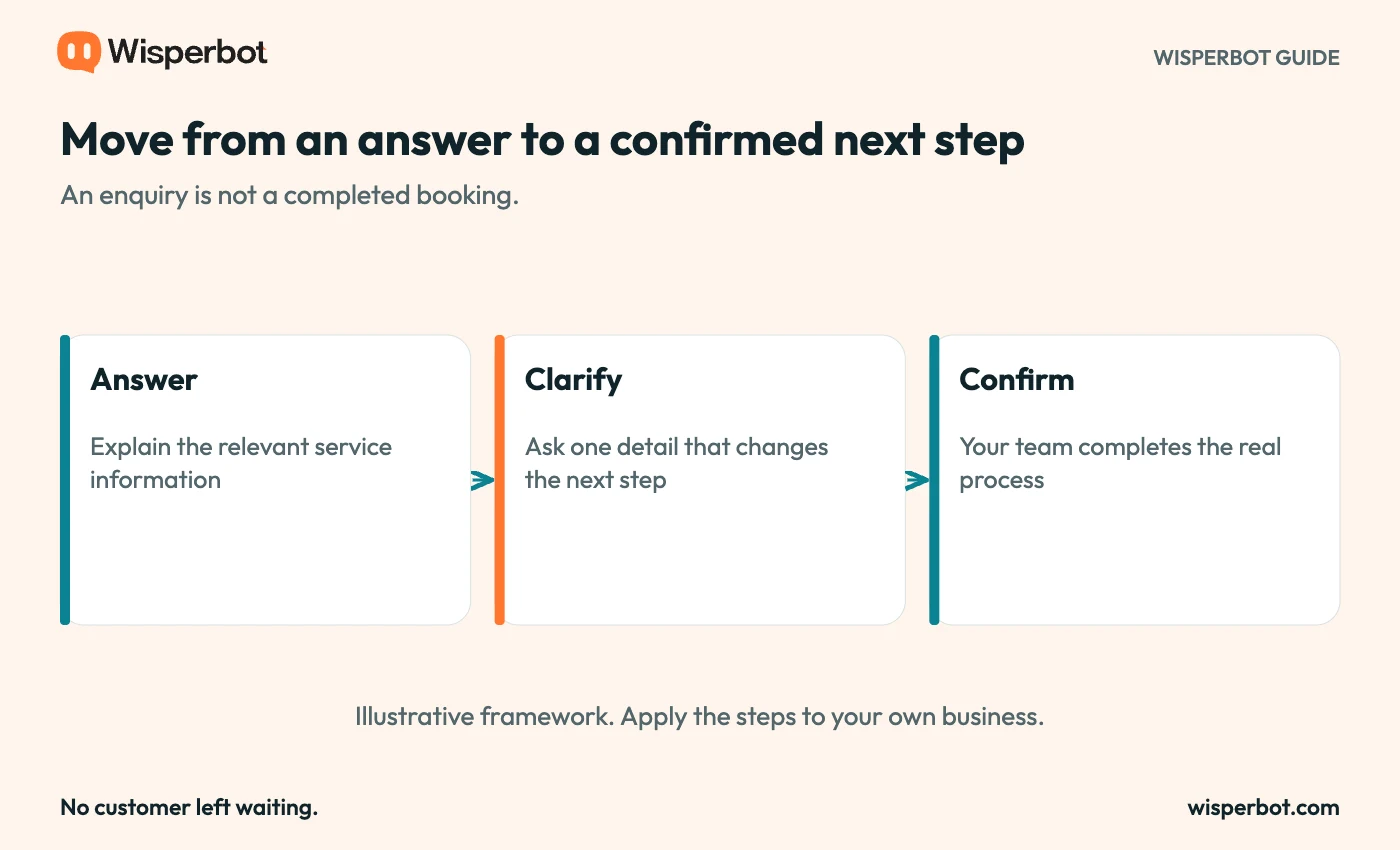
Suggested enquiry design. An appointment or quote remains unconfirmed until the business completes its actual confirmation process.
Give after-hours customers a realistic expectation
A bot can reply while the team is away. That does not mean a specialist is available all night.
Write the handoff message around the team's real schedule. If the business reviews enquiries the next working morning, explain that. Avoid a precise response-time promise unless the operation can support it.
Keep any urgent or sensitive situations within your business's approved process. A general service bot should not improvise emergency advice, medical guidance, or contractual commitments because a customer has asked confidently.
The owner of the service should approve those boundaries. A web developer can configure the interface, but the business must decide what its staff and software are authorised to say.
Keep qualification short enough to complete
Every extra question should have a reason. Ask whether the answer changes the next step or helps the team respond. If it does neither, remove it from the first exchange.
For an illustrative installation enquiry, the useful details might be service type and general location. A phone number can come later when the customer wants a callback. The exact sequence should reflect the service rather than a generic sales funnel.
Use suggested replies where they reduce typing, but treat them as customer text. A button labelled with a service interest can continue the enquiry. It does not authorise a charge, confirm a booking, or accept a contract by itself.
Read the conversation on a phone before launch. A qualification process that looks compact on a wide screen can feel like paperwork in a small chat window.
Review enquiry quality alongside volume
More messages are not automatically better enquiries. A bot that asks too many questions can create activity without helping the customer or the team.
Define a useful enquiry for your business. It might mean a relevant service request with enough context for a staff member to respond. Keep that definition stable while you evaluate the pilot.
Track missed follow-ups as well as completed handoffs. A well-written bot introduction cannot compensate for an enquiry that sits unanswered after the team returns.
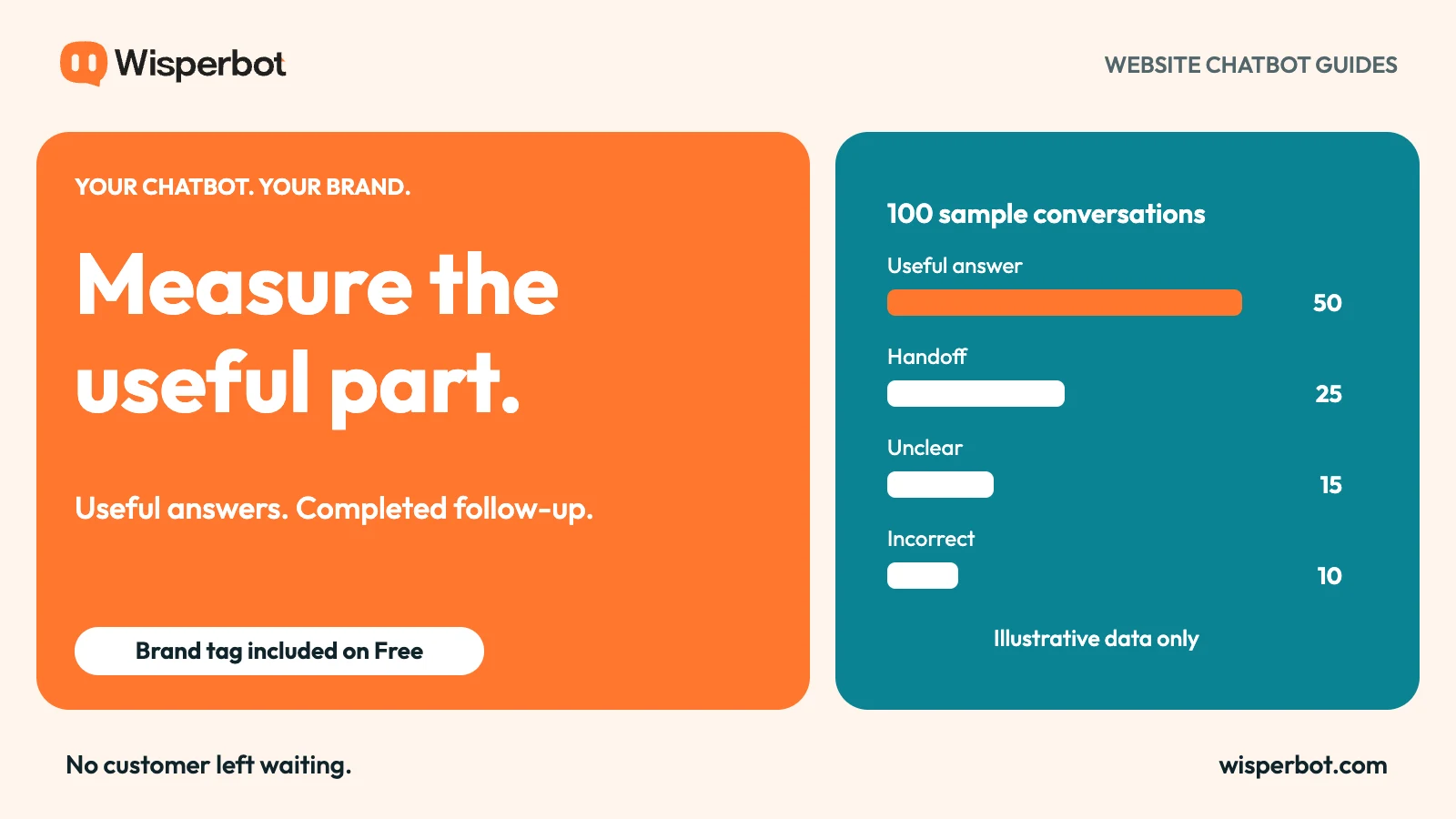
If you compare before and after periods, check whether traffic sources or advertising changed. An improvement in lead quality may come from better targeting rather than the chatbot alone. The measurement guide shows how to keep those claims proportionate.
Questions service businesses ask
Can I put my service name in the free chatbot?
Yes. WisperBot lets you edit the footer company name on every tier. The visitor-facing tag uses that name after “Powered by”.
Can it book appointments automatically?
Do not assume so. A booking requires a suitable integration and verified confirmation flow. A conversation about availability is not a completed reservation.
What should happen when the bot cannot answer?
Give the customer a clear human route and a realistic expectation for follow-up. Define who owns the enquiry before the bot goes live.
Set up one branded website conversation around a common enquiry. Use the human handoff guide to make sure the next person can carry it forward.