A Branded AI Chatbot for a Small Business Budget
Start a focused chatbot pilot under your own brand tag. See what a small business should prepare, test, and measure before paying for more capacity.
In this article
A small business website often gets built in spare hours. The owner writes the delivery policy after closing, chooses photographs between orders, and checks the mobile page on the way home. Every detail has to justify its cost.
The chatbot should follow the same rule. You need useful replies and a clear route to your team. You also want the conversation to carry your business name, even while you are trying a free plan.
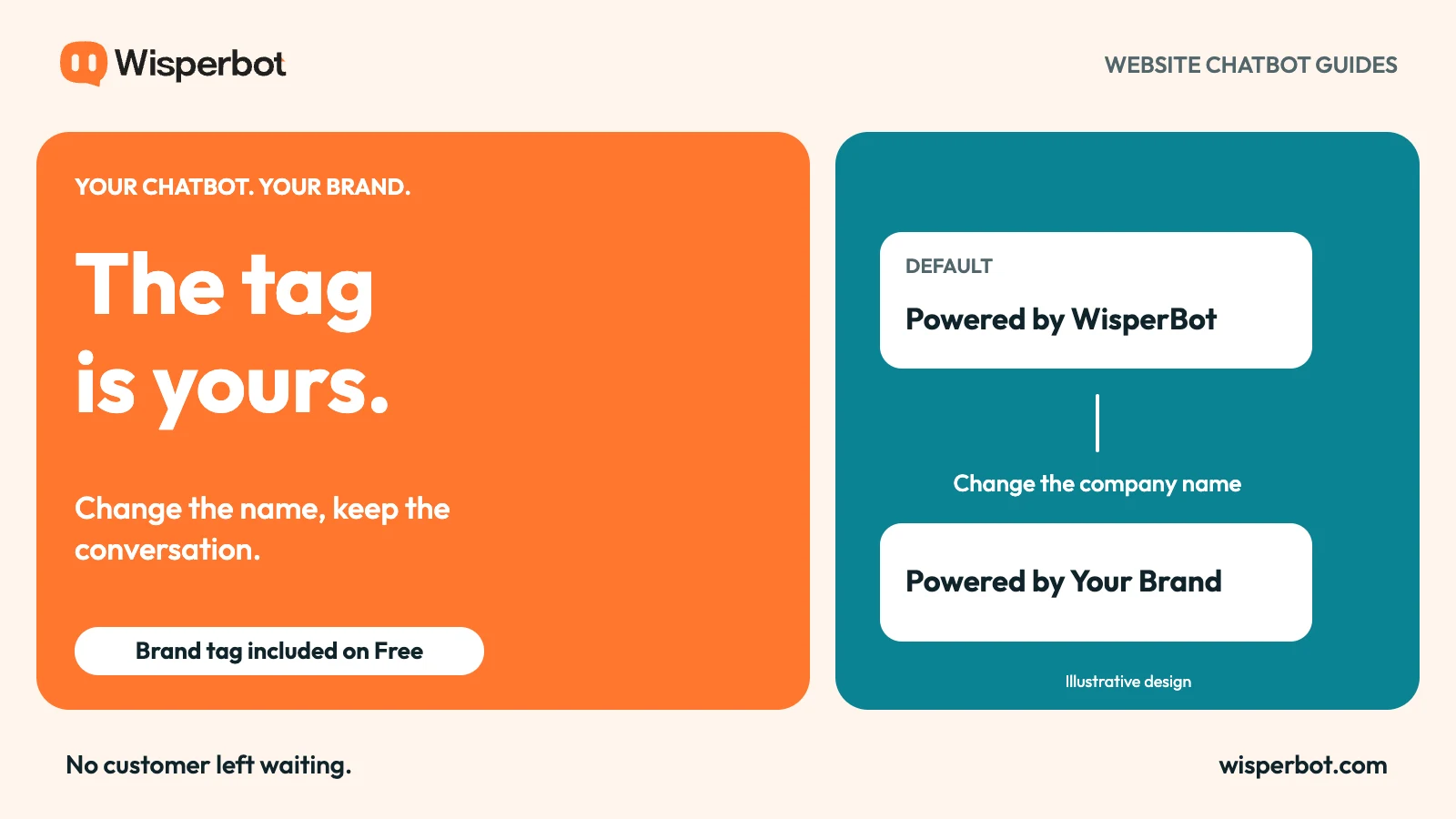
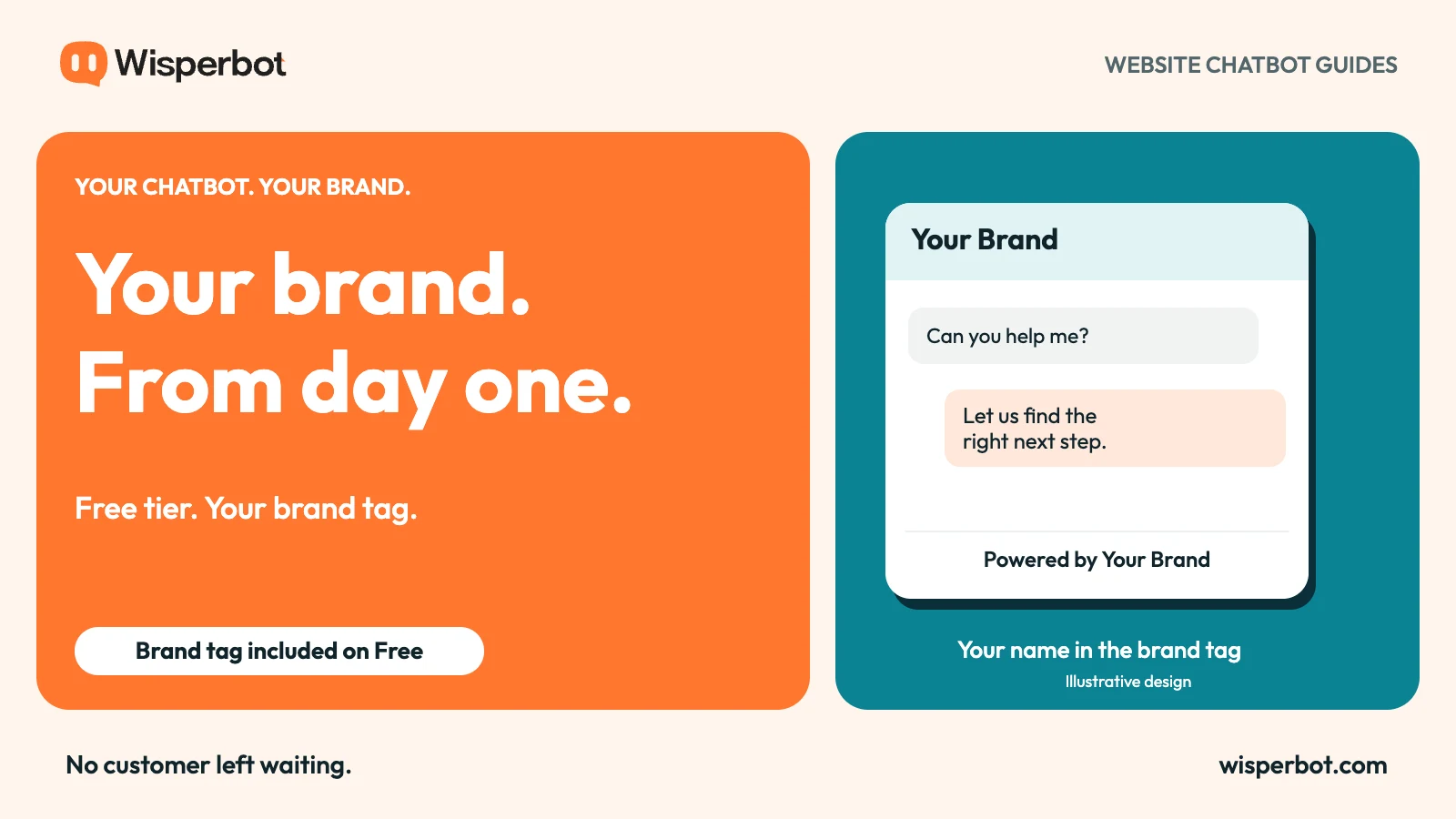
WisperBot lets you edit the chatbot's footer company name on every tier, including Free. Customers can see “Powered by Your Brand” in the chat window. You can test that branded introduction before deciding whether you need more capacity.
Spend the first week on one customer problem
The most useful starting point is rarely “automate customer service”. That is too broad to tell you whether the first setup works.
Choose a recurring problem. Perhaps visitors cannot find the delivery area. Perhaps they ask the same question about returns. A service business may repeatedly explain which enquiries need a consultation.
Collect the current answers in a short, clear source. Include exceptions that change the answer. “We deliver nationwide” is not enough if some products or locations are excluded.
Then decide what the bot must leave to a person. A routine policy question is different from a disputed charge or an unusual request. Starting with that boundary gives you something practical to test.
Separate the brand name from the software budget
A business does not become more recognisable only after it reaches a certain number of monthly chats. Its name matters on the first conversation as well.
That is why an editable footer is useful during a small pilot. You can present the intended business identity while checking whether customers use the service. Branding becomes part of the setup rather than a reason to pay before the pilot has taught you anything.
The free tag control has a specific scope. It replaces the company name after “Powered by”. The default launcher icon remains unless you have the separate paid custom-launcher entitlement. Do not build a budget on the assumption that every white-label feature is free.
| Early decision | A sensible starting point | Evidence to collect |
|---|---|---|
| Brand identity | Use your public business name | Footer is correct on mobile and desktop |
| Knowledge | One current policy or service guide | Common questions receive accurate answers |
| Human route | One responsible person or team | Escalated conversations receive follow-up |
| Capacity | Begin within the plan allowance | Actual credits and conversation demand |
| Expansion | Add scope after reviewing failures | Fewer repeat gaps in the answer set |
Make a useful answer easy to recognise
Consider an illustrative homeware shop. A visitor asks whether a fragile item can be delivered outside the city. A generic greeting does not settle that question. A full shipping policy pasted into chat may not settle it either.
A useful answer identifies the relevant delivery condition, asks for the missing location if needed, and explains the next step. If the information is unavailable, the bot should say so and offer human help.
The same principle applies to tone. A warm greeting can fit a small shop, but it cannot compensate for an invented delivery promise. Keep the business facts stable and make the language easy to understand.
WisperBot provides business details, knowledge sources, and answer settings within Smart Bot setup. Use them to create a focused first version. Read the knowledge and voice guide before adding more instructions.
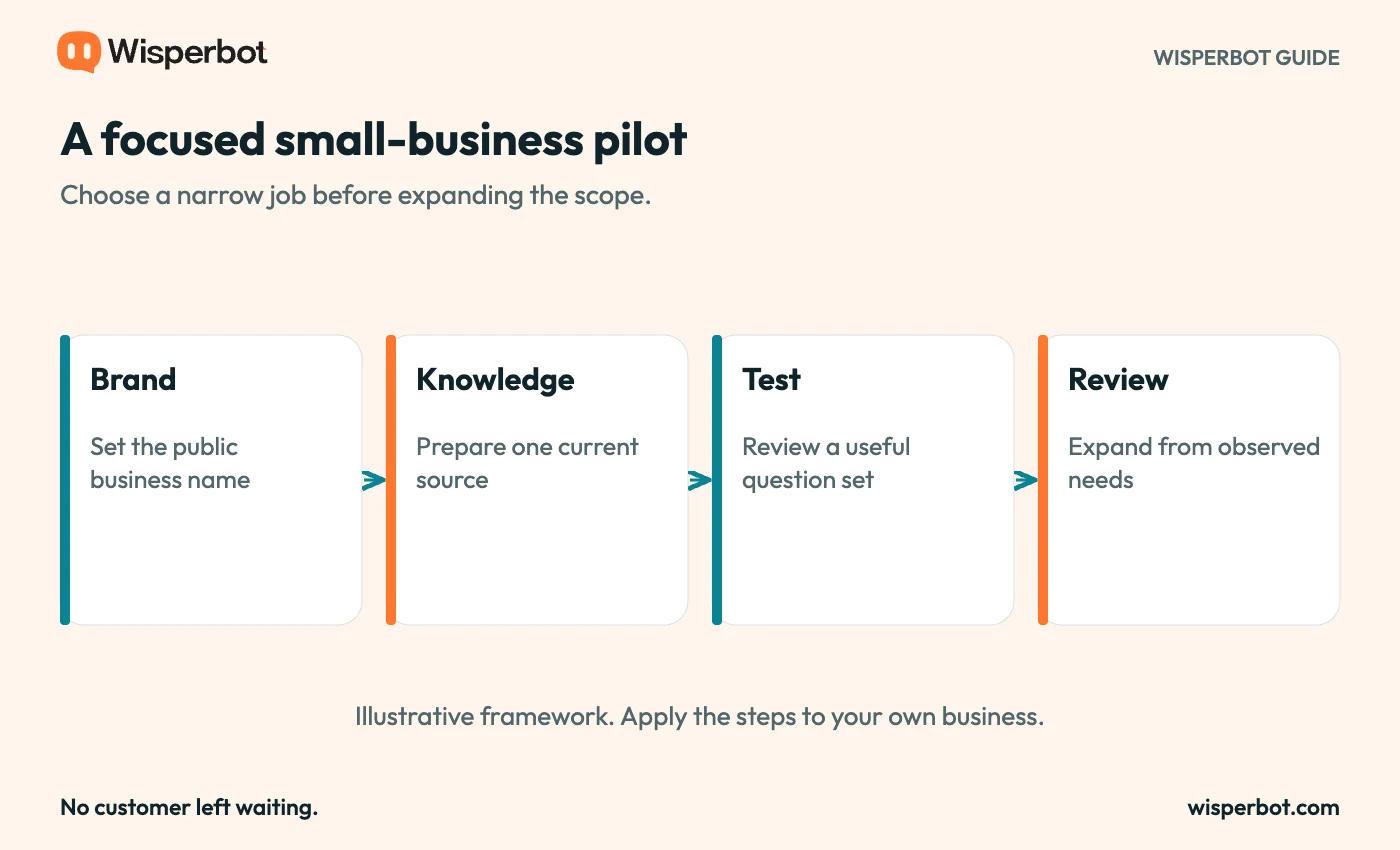
A suggested pilot sequence. The steps are planning guidance, not a claim about setup speed.
Count your own time as part of the cost
A free software subscription can still require work. Someone has to prepare the information, test the replies, and maintain the sources when the business changes.
Keep a simple record of that effort. If it takes an hour to tidy the delivery policy, record it. If the same confusing source causes repeated errors, fixing that source may be more valuable than buying additional features.
Human review also belongs in the budget. During the pilot, check conversations regularly enough to catch the mistakes that matter. A small business should not have to discover a wrong policy answer through a customer complaint.
Avoid treating every automated answer as time saved. Some answers would never have required a human reply; others lead to more follow-up. Compare actual work before and after, using the same definition of a completed enquiry.
Use a manageable test set
Write down questions in the way customers ask them. Include short messages, spelling variations, and incomplete requests. Test a plain question such as “Do you deliver here?” alongside a more specific location question.
Add a question the bot should refuse to guess about. For a shop, that might be an unpublished discount. For a service provider, it might be an appointment that nobody has confirmed.
Also ask for a person. Check that the visitor receives a useful expectation when the team is unavailable. “Someone will reply immediately” is a poor message if the owner will not return until morning.
Save the question, the answer, and what needs fixing. Repeat the test after changing the source. A small, consistent test set helps you see progress without turning setup into a large research project.
Upgrade when the limit affects real work
Once the pilot is running, the right upgrade question becomes clearer. Are you reaching the AI allowance? Does another teammate need access? Is there a separate feature the business now needs?
Those questions connect spending to an observed need. “We might need everything later” does not.
Check the current plans when you make the decision. Credits and other allowances can differ from the number of customer conversations, and external providers may charge separately for their services.
The footer name does not need to wait for that decision. Put your brand there from the start, run a focused pilot, and let the conversations tell you what deserves more investment.
Questions small business owners ask
Is a free chatbot enough for a small business?
It can be enough for a limited pilot or a small workload. Judge it against your actual usage, answer quality, and need for human follow-up rather than the word “free” alone.
Can I use my name without buying custom artwork?
Yes. WisperBot's footer company name is a text field available across tiers. Uploading a custom launcher image is a separate paid feature.
What should I add to the knowledge first?
Start with a current source that answers a recurring customer question. A clear delivery policy or service guide is more useful than a large collection of outdated pages.
For the full branding scope, read the free white-label chatbot guide. Then set up one useful conversation under the name your customers already know.