Multichannel vs Omnichannel: What Changes for Customers and Support Teams?
A clear comparison of multichannel and omnichannel support, including customer experience, team operations, data, automation and migration steps.
In this article
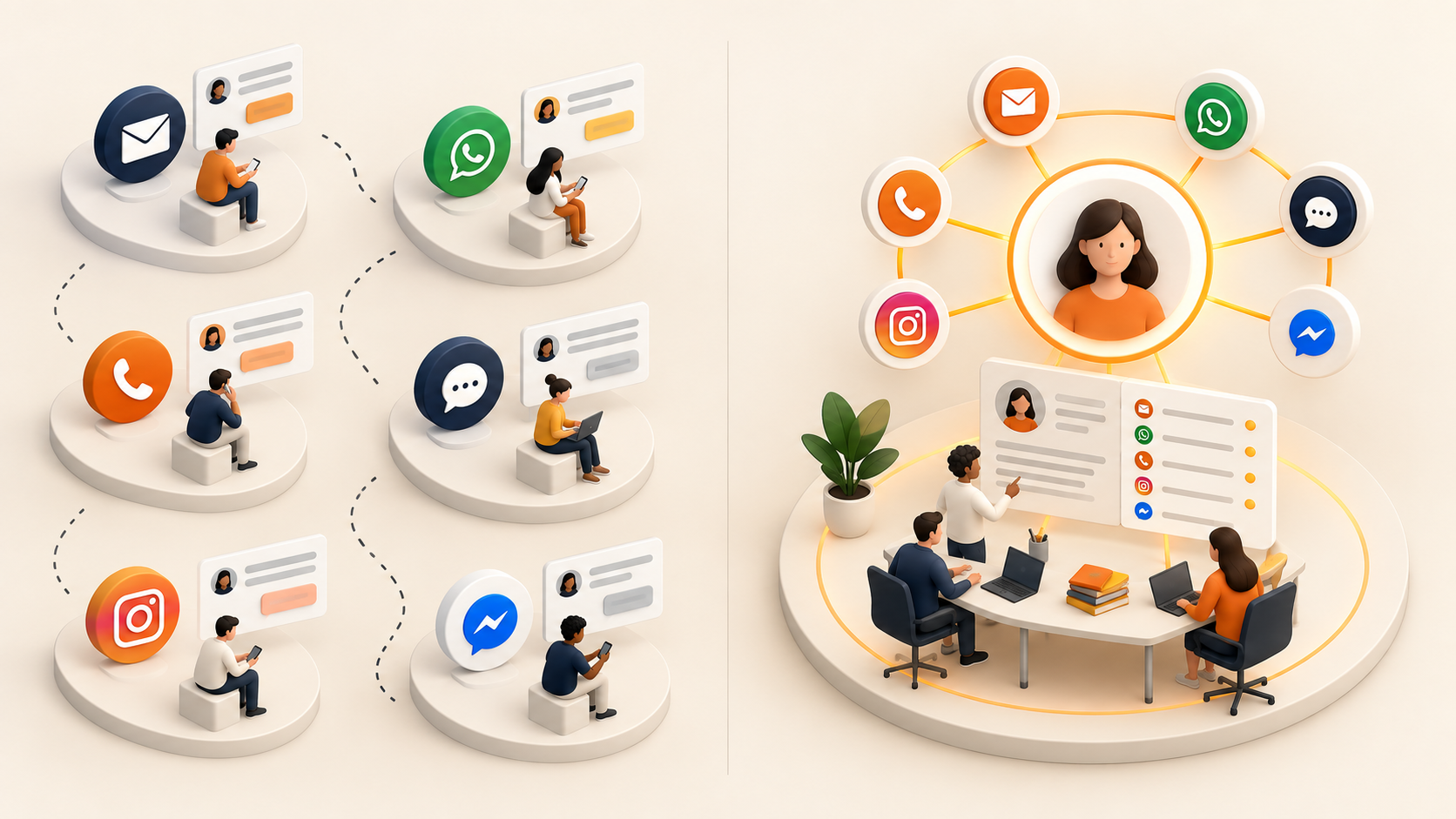
Multichannel support gives customers several ways to contact a business; omnichannel support connects those ways into one continuous service journey. The difference is not the number of channels. It is whether customer identity, conversation history, ownership and service rules follow the customer when the channel changes.
Multichannel vs omnichannel at a glance
| Question | Multichannel | Omnichannel |
|---|---|---|
| Are several channels available? | Yes | Yes |
| Is customer history joined? | Usually partial | Designed to be shared |
| Does ownership cross channels? | Often separate | One accountable workflow |
| Are service rules consistent? | Channel-specific | Coordinated centrally |
| Can reporting follow the journey? | Difficult | Yes, with identity and event design |
What changes for customers
In a multichannel model, a customer may get fast service in each individual channel but still repeat their order number, problem and previous troubleshooting. In an omnichannel model, the next responder should see the useful history and continue from the right point. The goal is not to force channel switching; it is to make switching safe when the customer chooses it.
What changes for the support team
Ownership replaces inbox watching
Teams move from checking multiple applications to managing assigned queues. A conversation has a current owner, priority and next action.
Policies become channel-aware
Shared operations do not erase provider limits. WhatsApp, social messaging, email and web chat retain different identity, consent and reply rules. See WisperBot’s integration coverage before designing a workflow.
Reporting moves from messages to outcomes
Channel volume remains useful, but leaders can also inspect transfers, reopen rates, total resolution time and the path a customer took.
When each model is appropriate
Choose multichannel first when one person manages low volume and each channel serves a distinct audience with little overlap.
Choose omnichannel when customers contact more than one team, multiple agents share responsibility, or separate histories are causing repeated questions and missed commitments.
A low-risk migration path
- List every channel, owner, credential and current response target.
- Pick one shared conversation system and define customer identity rules.
- Connect the highest-value channel, then one channel with strong overlap.
- Create queues, assignment, escalation and role permissions.
- Import only the history the team genuinely needs and is allowed to retain.
- Test a channel switch, agent transfer and after-hours escalation.
- Compare resolution and repeat-contact data before adding more automation.
For a deeper operating model, read What Is Omnichannel Customer Service? and the shared inbox guide.
Frequently asked questions
Is omnichannel always better?
No. It adds operational value when channels and teams overlap; it can be unnecessary complexity for very low-volume single-owner support.
Can a company be partly omnichannel?
Yes. Many teams unify their highest-volume messaging channels first and keep specialist channels separate until the process is ready.
Does omnichannel mean every channel must have the same response time?
No. Service targets may differ, but they should be intentional, visible and measured consistently.
Will omnichannel automatically merge customer profiles?
It should support identity resolution, but strong matching rules and manual review are needed to avoid incorrect merges.
What is the first sign that multichannel tools are failing?
Customers repeatedly explain the same issue while agents search other inboxes for context.
Can automation work across channels?
Yes, when triggers and actions respect each provider’s capabilities, consent rules and escalation paths.
Source
Zendesk: omnichannel contact center guide
Last verified: 18 September 2026.